We decided on the spot for the well
before we ever put in the first bus over 20 years ago.
My son Bonnar was the best in our family at water witching -
(it is just a word - nothing to do with witchcraft, magic or any such
thing -
I now understand how it works scientifically)
and we had him go out and survey the land.
This is the best spot for the well he said -
but it was not where I really wanted to put the shelter.
Well, try again I said.
Three times we tried and he always picked that spot.
Oh well, said I, this will do well for the well. Well, well, well.
We lined up the first buses to that spot -
and placed the water settling tank facing it.
But immediately over the well location,
I did not place cement -
so that I could dig down through the dirt.
And dig I did.
Down, down, down.
Thinking the water would only be another foot or two.
|
Click on photo to enlarge

|
Over the years I tried to dig the hole down further and further.
Then when I ran into rock I tried drilling and placing dynamite.
But the first dynamiter I got years ago was terrible -
and time and again I had to go down and dig out the dead heads.
Had to stop that before I became a dead head.
Volunteer crews came and with jack hammers and
we pressed on downward.
After several years finally got down to 35 feet in sort of an ice-cream cone shape -
but no water.
Decided that Bonnar was wrong.
We know where the water comes out the side of the cliff in a spring,
(which was the source we had been using)
so we had the surveyor come and survey a tunnel path for us to there.
We would dig the vertical shaft down
and then tunnel over to the spring.
The water is at fifty-three (53) feet,
the surveyor said,
but he felt we wouldn't have to tunnel,
because he thought we would hit a water table.
|
|
Click on photo to enlarge
|
In the Summer of '98, a new blaster came
and blasted away the thick concrete wall that had created
a narrow door between the shelter and the well.
We poured a new concrete supporting post, floor and wall
and were ready to start blasting down to the well.
It was a miracle finding the right person to do it.
He had been raised in this area and had family here,
so answered my ad on the government employment net -
just on that whim.
He now lives in Northern Ontario and holds 14 mining tickets -
including dynamiting.
When the Safety Board was called in on us,
the inspectors just shook their heads and said we were doing everything
right.
Then in 2000 he came and widened the well to five feet
all the way down from below the 7 ft concrete collar.
We rented a tractor,
and he brought from up north a marvelous winch to go on it.
Also he brought powerful miner's drills,
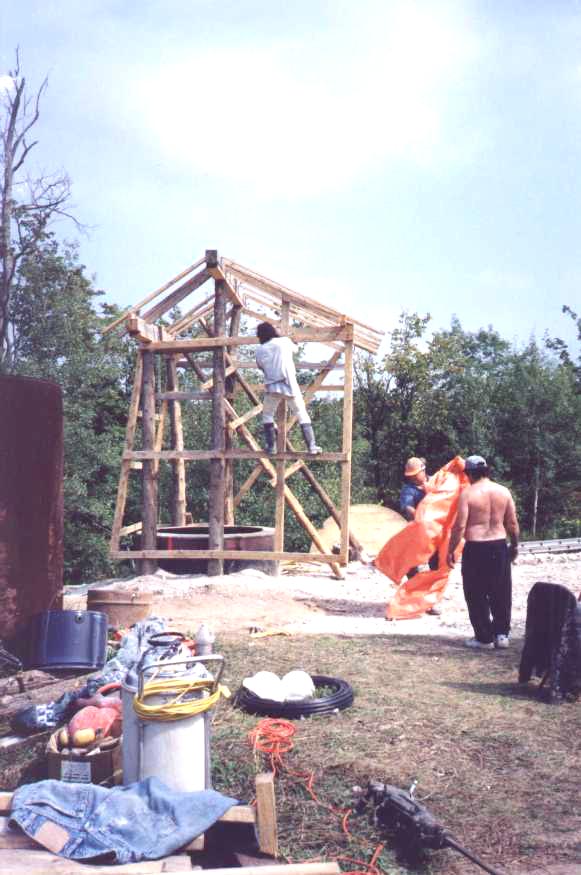
and two great helpers. The photograph is of the winching stand.
He thought they would do eight feet a day,
but it averaged out to more like eight inches a day.
Finally, weeks later we reached water at 52 feet and 10 inches.
Just where the surveyor said we would.
It is in a stream about the thickness of a broom stick,
that came in through the wall,
at the rate of a little over 6 gallons per minute.
|
|
Click on photo to enlarge

|
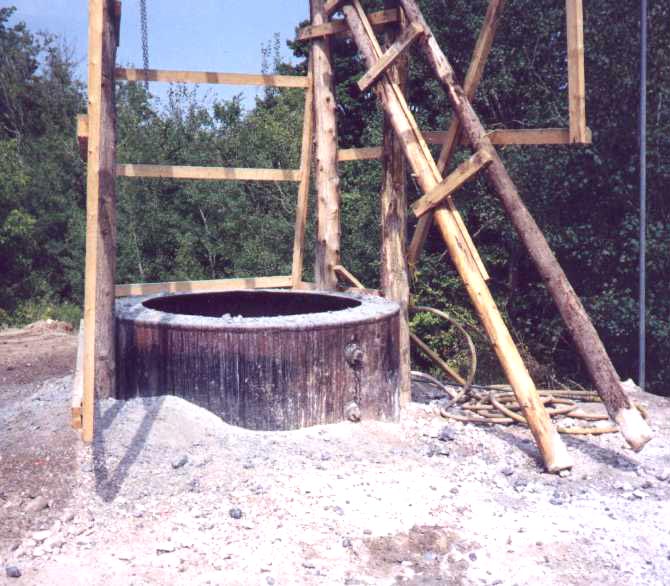
Around the top of the well casing you can see the sand thrown up by by the blasting. We used powerful pumps to keep the water out and dug down another four feet below where water came in, to create a reservoir,
and hollowed out the sides to capture 1500 gallons of water.
Then we drilled around the incoming jet of water,
to increase the flow.
We drilled all around it everywhere in a six inch circle.
to a depth of four more feet back into the rock,
but they were all completely dry.
And we drilled all around the rest of the well.
But this was the only real source of water
and it came in only that one stream.
If we had put the well over a few feet in any direction
we would have missed it.
Thank you Bonnar.
|
|
Click on photo to enlarge
|
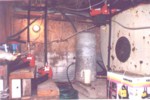
The pumps are now installed.
Two one horsepower pumps
that together can pump better than 15 gallons per minute.
We can fill our settling tank in about 30 minutes,
and then turn off the generators.
(We also have a back up hand winch and bucket).
That is the stainless steel settling tank on the right hand side of the picture.
|
|
Click on photo to enlarge
|
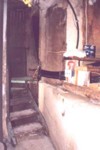
A third pump fills the big stainless steel milk tanker -
(like you see on the highways)
that we have buried underground.
It gravity feeds directly into the shelter.
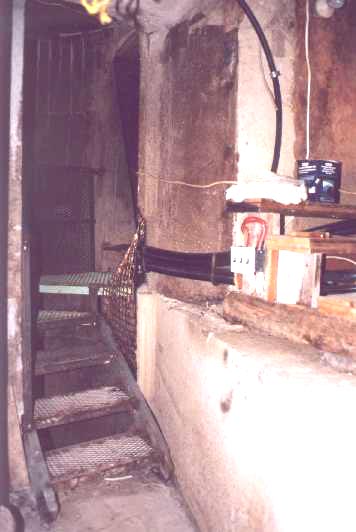
If you enlarge this picture you can see the three switches that control the three pumps and the doorway that goes out directly over the well where we can bring the water up by bucketfuls - if necessary.
|
|
Click on photo to enlarge
|
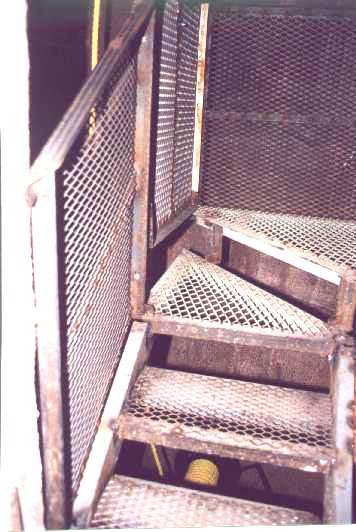
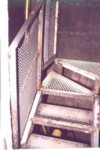
We cut off the top of the well casing and welded a steel lid above the steel steps in this picture. The top of the well casing is several feet underground, mostly covered by concrete to give it extra protection. The mechanical draw bucket hangs from the overhead steel casing lid.
The steel steps over the well then lead on out to the steel rear exit tunnel which you see in the next photograph following.
|
|
Click on photo to enlarge
|
When the Fire Marshal ordered us to put in a back door,
this was the area where it needed to go also,
so I thought to just bring it in over the well
and have the backhoe dig out the well for me at the same time.
We brought in a 7ft in diameter big steel tank for the well casing
and I had the backhoe dig down 20 feet to place it.
BUT, we ran into rock,
so I had the well casing set on the rock,
and later started digging under the casing so that it would drop further down. Eventually I put a concrete ring around under the casing
to connect it to the rock.
(Didn't do as good a job as I thought
and we later had to scale away quite a bit).
|
|
Click on photo to enlarge
|
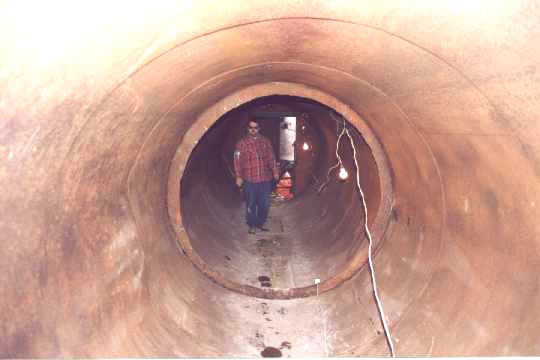
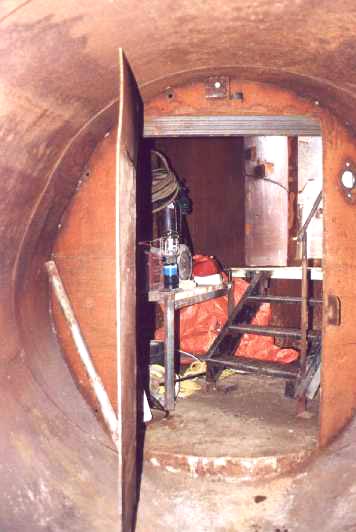
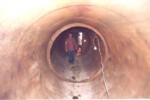
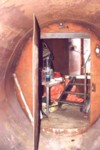
This is standing inside the last of the two steel tanks that slope up toward the surface and you can see through one of the steel doors
to the steel steps that finally lead up to another steel door and to the outside.
|
|
Click on photo to enlarge

|
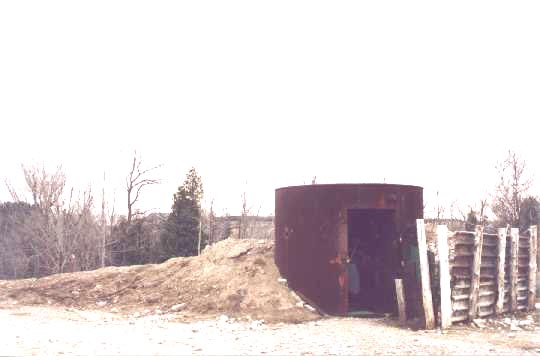
This is the view of the vertical entrance tank that is on the outside and which leads to the two sloping tanks that lead down over the well, through the pumproom and into the shelter. As you can see the tank is heavily reinforced on the outside with railway ties and dirt, which is a part of the blast shelter characteristics of this facility.
|